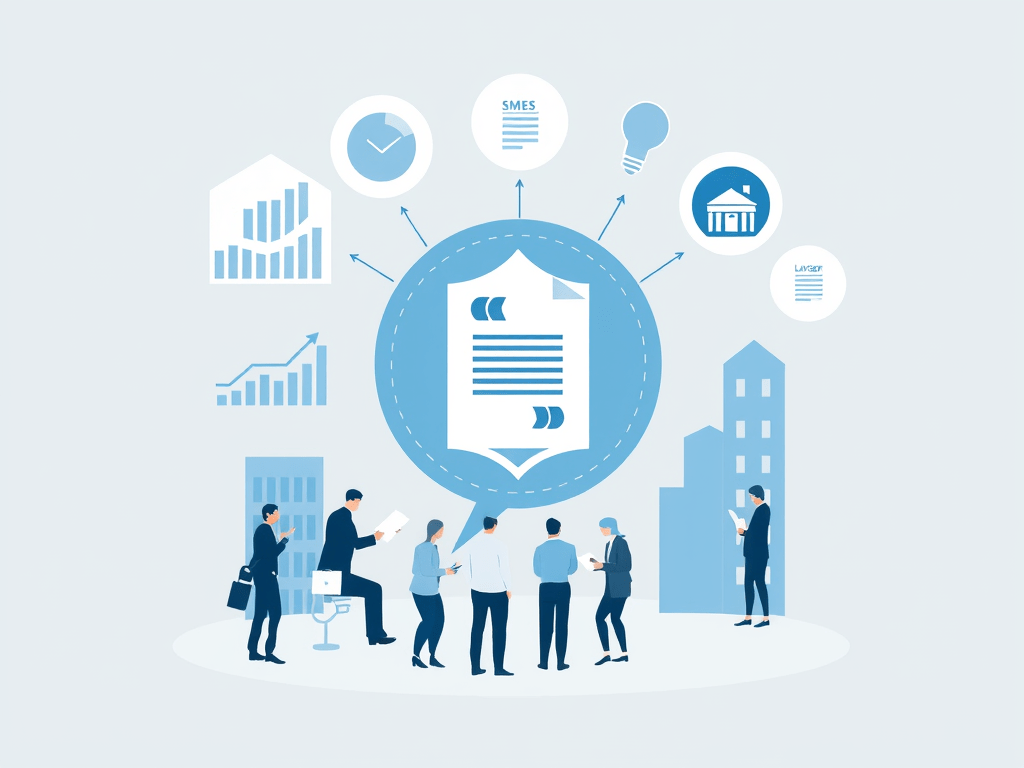
Enterprises are not defined by isolated tasks but by interconnected processes. Underwriting, claims handling, compliance checks, supply chain operations, and portfolio management all depend on overlapping decisions and interacting workflows. A single intelligent agent can adapt within one process, but enterprise challenges rarely stay confined to one domain. They demand multiple roles, diverse skills, and coordination across complex systems. This is where Multi Agent Systems, or MAS, become critical.

Understanding Multi Agent Systems

A Multi Agent System distributes intelligence across a network of specialised agents that work together to achieve enterprise goals. Each agent has a defined role such as document analysis, risk scoring, monitoring, or negotiation, and it interacts with others through communication protocols, negotiation methods, and conflict resolution strategies.

MAS research has matured over decades in computer science, robotics, and game theory. Only recently have advances in artificial intelligence, high performance computing, and data infrastructure made it possible to apply MAS at enterprise scale.

At the core, MAS coordination is organised through three recognised models:

1. Centralised Coordination

  • How it works: A central controller allocates tasks and gathers results, similar to client server models.
  • Strengths: Strong governance, accountability, and easier monitoring.
  • Weaknesses: Single point of failure and communication bottlenecks.
  • Use case: Compliance heavy workflows such as regulatory reporting, where auditability and control are essential.

2. Distributed Coordination

  • How it works: Agents act independently but collaborate through peer to peer protocols such as contract nets, auctions, or voting systems.
  • Strengths: Resilience, fault tolerance, and scalability in dynamic environments.
  • Weaknesses: Complexity in debugging and auditing due to emergent behaviour.
  • Use case: Fraud detection in banking, where distributed monitoring across channels helps reduce systemic risk.

3. Hybrid Coordination

  • How it works: Combines central oversight with distributed autonomy. A master agent sets overall goals, while groups of agents negotiate their own strategies to achieve them.
  • Strengths: Balances control with flexibility, reducing bottlenecks while maintaining governance.
  • Weaknesses: Requires careful design to avoid combining the limitations of both centralised and distributed models.
  • Use case: Customer service operations or supply chain management, where policies are centrally defined but execution must adapt to changing conditions.

The model chosen depends on the workflow and the priorities of the enterprise, whether that is resilience, adaptability, or compliance.


Enterprise Applications Emerging Today

MAS is already in use across industries. Some examples include:

  • Fraud Detection: Banks and fintech firms use distributed MAS to monitor millions of transactions in real time. Each agent looks at different signals such as geography, device behaviour, or transaction velocity, and they collaborate to identify anomalies.
  • Insurance Underwriting and Claims: Providers like Shift Technology and CLARA Analytics deliver modules for document review, fraud scoring, and severity prediction. These modules behave like agents and are used within workflows at insurers such as AXA and Munich Re.
  • Supply Chain Optimisation: Siemens and SAP have piloted MAS in digital twin platforms, where logistics, pricing, and inventory agents negotiate trade offs to reduce costs and improve resilience.
  • Portfolio Management: Financial institutions are experimenting with MAS in trading and risk management. JPMorgan’s Athena platform and published research on multi agent systems in financial markets show how pricing, risk, and compliance agents can operate together.

These examples show that MAS is moving from research into live enterprise deployments, often forming the invisible backbone of modern systems.


Architectural Implications for Enterprises

For solution and enterprise architects, MAS creates both opportunities and challenges. They cannot be treated as stand alone applications. They must be integrated into the wider enterprise architecture.

Key design considerations include:

  1. Shared Data Environment
    Agents need high quality, governed data to collaborate effectively. Without common semantics and access controls, MAS will produce inconsistent or unreliable outcomes.
  2. Communication Protocols
    Standardised APIs, message brokers, or agent communication languages are required. These must support negotiation, escalation, and reliable coordination.
  3. Observability and Explainability
    MAS need strong observability. Logging, audit trails, and drift detection are necessary to explain emergent outcomes and meet regulatory expectations.
  4. Integration with Orchestration and MLOps Pipelines
    Continuous updates are critical. MAS must connect with workflow engines, CI/CD pipelines, and MLOps tools to ensure ongoing adaptability without breaking coordination.
  5. Security and Trust
    Agents must be protected against risks such as prompt injection, adversarial inputs, and data leakage. Techniques such as sandboxing, encryption, and identity management are essential.

Supporting Infrastructure

The MAS ecosystem is also growing.

  • Frameworks like LangChain and LlamaIndex make it easier to connect LLM powered agents.
  • Vector databases such as Pinecone, Weaviate, or Milvus provide contextual memory.
  • Specialised hardware like GPUs and TPUs enables low latency inference at scale.

How MAS Work in Practice

In practice, MAS mirrors how enterprises function.

  1. An event occurs, such as a claim submission or a market change.
  2. Specialised agents analyse the event from different perspectives, such as fraud scoring, pricing, or compliance.
  3. The agents communicate, negotiate, or escalate disagreements until a consensus is reached.
  4. The decision is integrated into enterprise systems, resulting in an approved claim, an executed trade, or a rerouted shipment.

MAS reflects the distributed yet governed way enterprises already operate.


Multi Agent Systems represent the next stage in enterprise AI. They go beyond the intelligence of a single agent by distributing responsibilities across a cooperative network. Enterprises already depend on interconnected processes, and MAS brings that same principle into the digital environment.

The opportunity lies in embedding MAS into enterprise architecture so that pilots mature into trusted and scalable capabilities. The challenge is no longer whether MAS can be built, but how they can be integrated into the operating model.

Leave a comment

Trending